
Blog·Nov 19, 2026
Drone photography for construction sites
Construction drone photography gives you a view of a project that nobody on the ground can get. It shows the site as a whole, the progress over time and the scale of the work. Done well, it is useful to the project team and valuable in marketing.
This guide covers what to capture, when to capture it and what to plan for before anyone puts a drone in the air.
Why fly a construction site
Aerial work helps in three ways.
- Documentation. A set of aerial photos taken at regular points is a clear record of how the site changed.
- Communication. Owners, lenders and partners who are not on site can see what is happening without visiting.
- Marketing. A strong aerial of a finished building or a major milestone shows scale and quality in a way a ground photo cannot.
Drone work is one tool among several. A good jobsite record also uses ground photography and film, and often the best marketing images are not aerial at all.
What to capture at each stage
Plan the flights around the life of the project.
- Before work starts. The untouched site, its boundaries and its surroundings. This is your baseline.
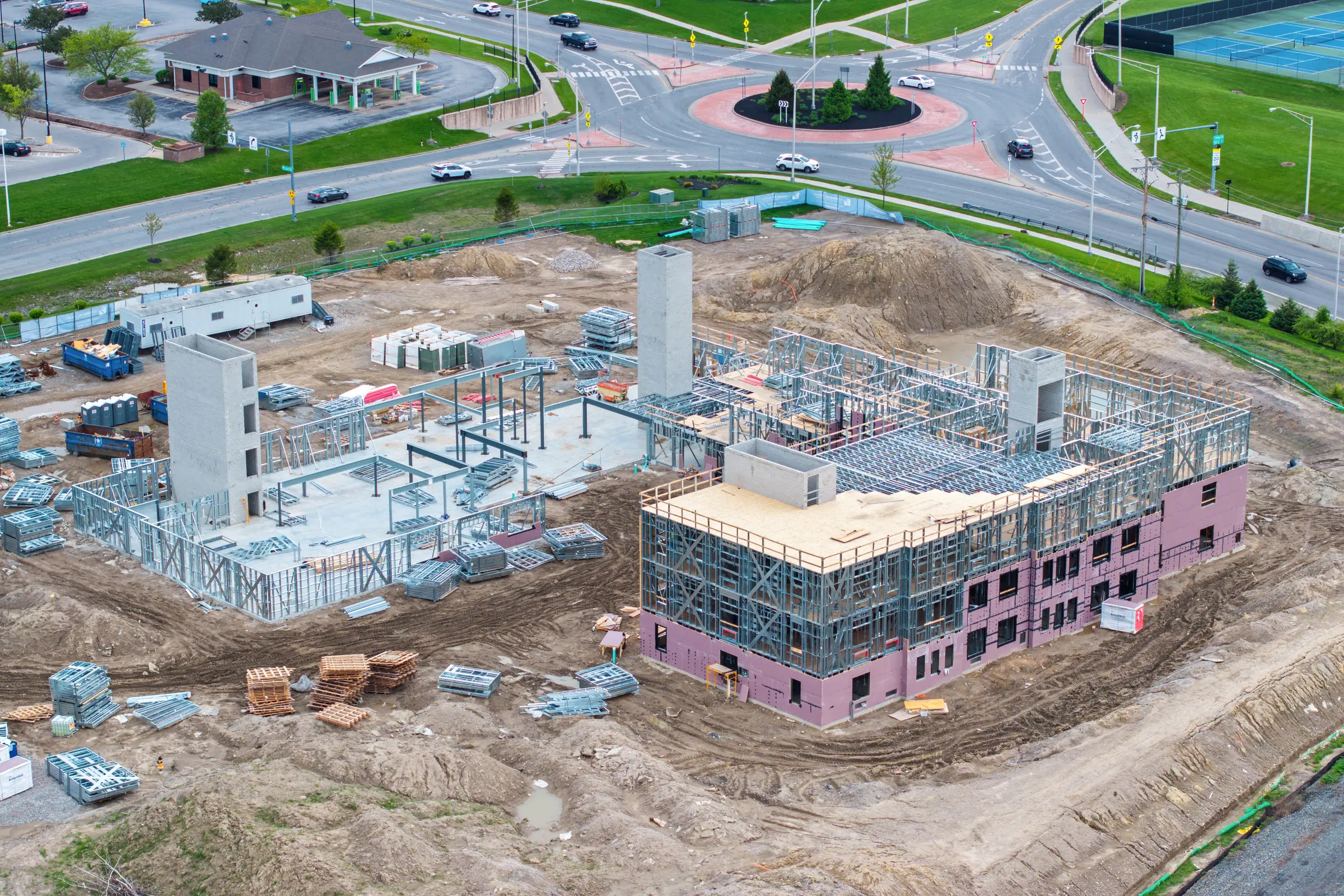
- Site preparation. Clearing, grading and access roads. Aerials show how the site is laid out and how materials will move.
- Foundation and early structure. The footprint of the building becomes visible from above in a way it never does from the ground.
- Major structure. Framing, steel and the shape of the building taking form.
- Exterior and envelope. Roofing and cladding, which look different from above than from the street.
- Completion. The finished project in its setting, in good light.
At each stage, shoot both stills and video. Stills are better for records and for print. Video, especially a slow orbit or a pass along the length of the project, shows depth and scale.
Repeat your angles
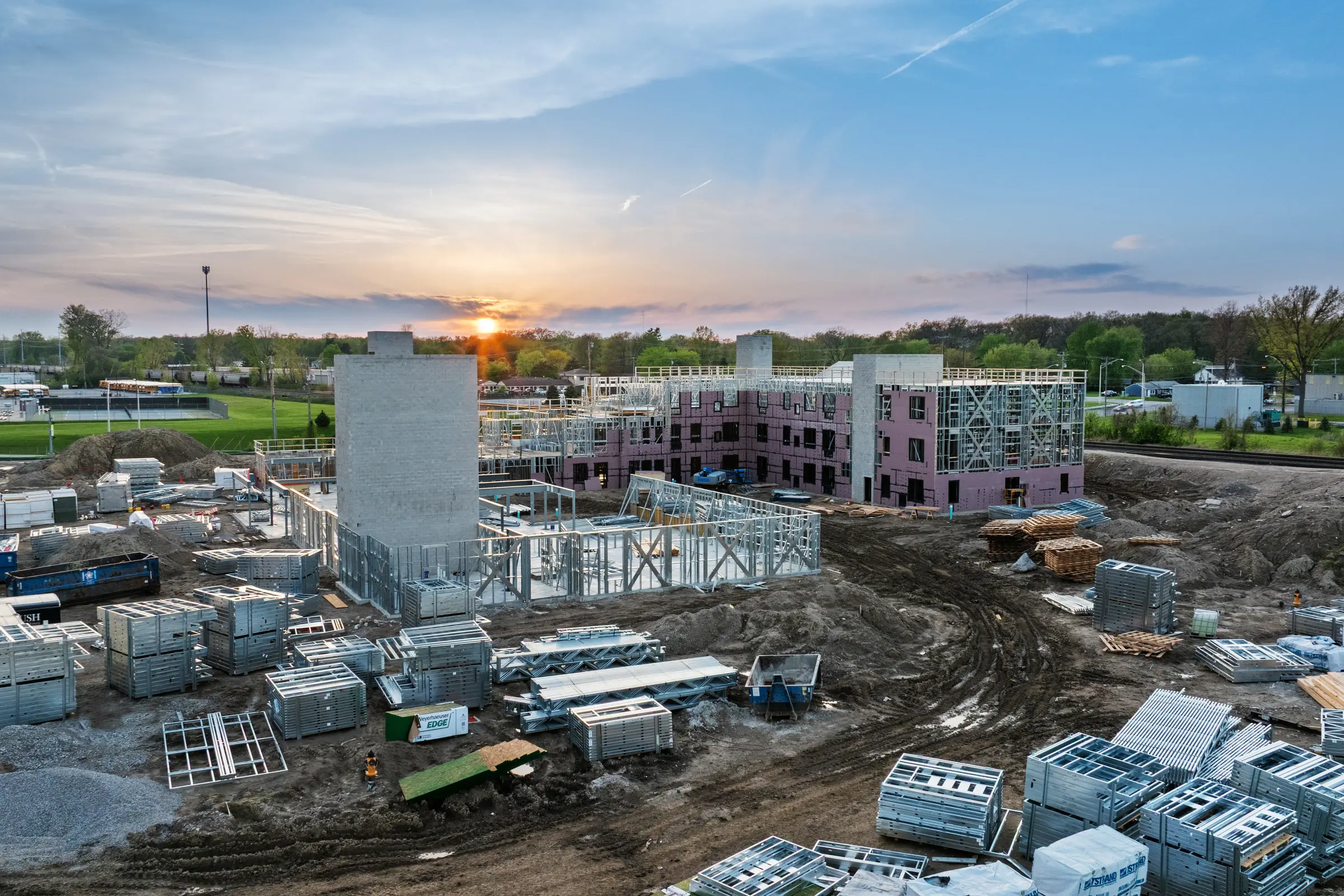
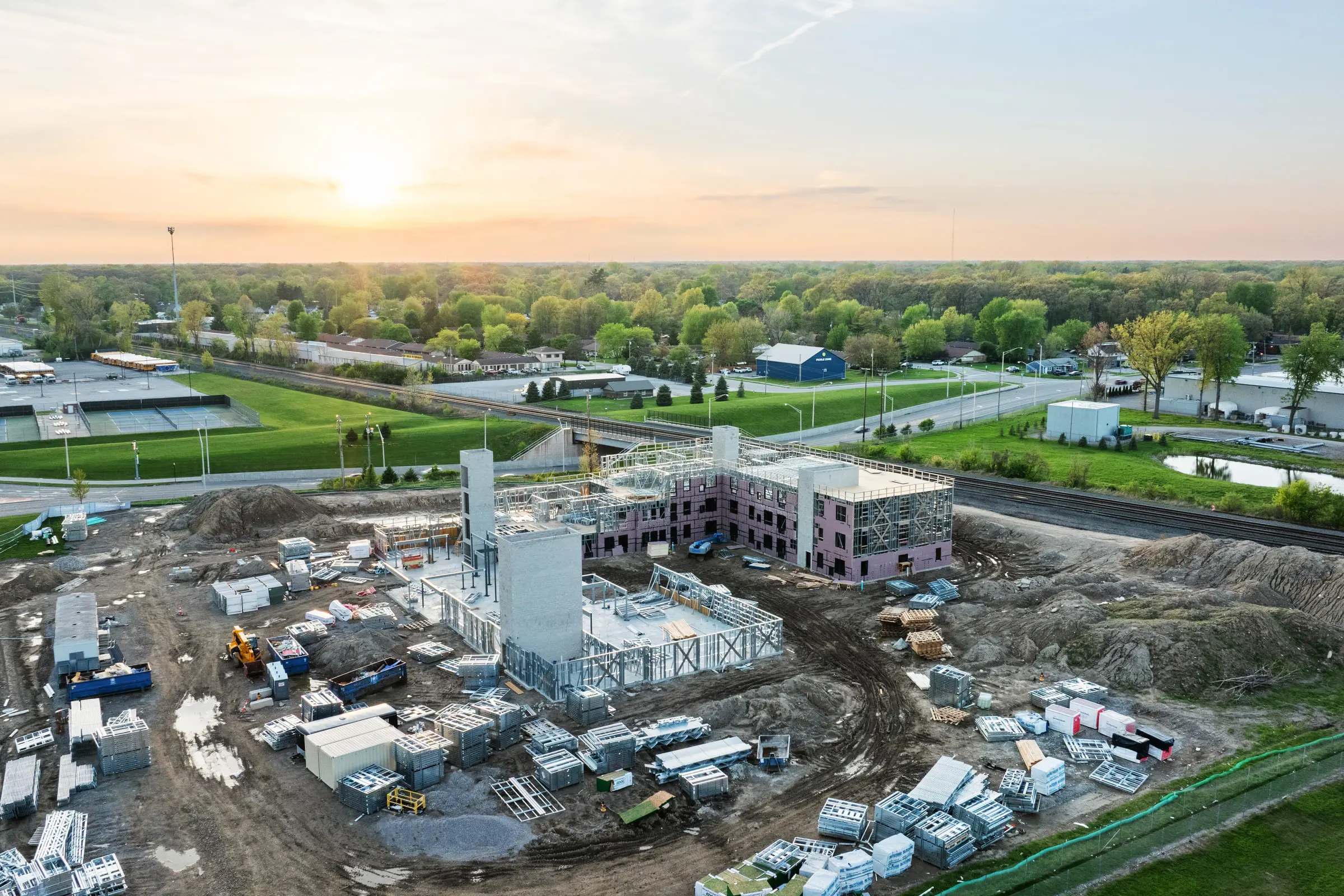
If you want to show progress, consistency matters more than variety. Fly the same positions, at the same heights and in the same directions each time, so the images can be compared side by side. A before-and-after, or a sequence across several visits, is one of the most useful things a construction company can show.
Write the positions down, or have the same crew fly each visit, so the record holds together.
Light and timing
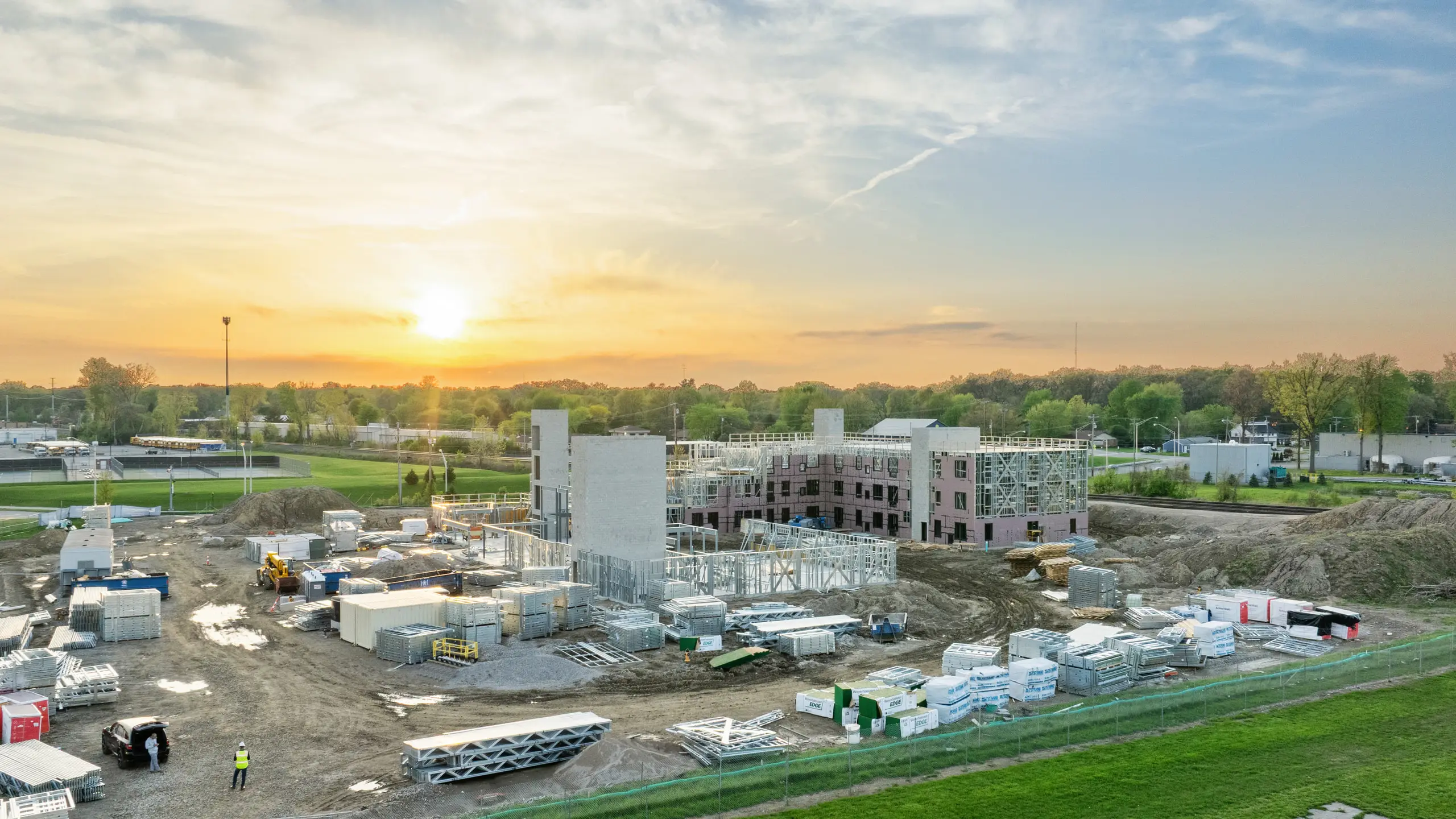
Early or late in the day gives longer shadows that show the shape of the structure. Midday sun flattens it. Overcast days soften everything and can look dull, though they are fine for records.
For finished projects intended for marketing, pick the best light on purpose. For a progress record, consistent timing helps more than perfect conditions.
What to plan for before you fly
Jobsite aerial work is a regulated activity with real people below it. A few things come first.
- A certified pilot. Commercial flights in the United States require FAA Part 107 certification. We are FAA Part 107 certified and insured.
- Airspace. Some sites are near airports or restricted areas and need authorization before any flight.
- Site rules. Talk to the site superintendent about when flights are allowed and where people will be working.
- Safety. Keep the aircraft away from crews, cranes and active equipment, and have a plan for the weather and wind.
- Permission. Get the owner’s approval to capture and share the project.
A good pilot treats these as part of the job, not an afterthought.
Make one flight work twice
The most efficient approach is to plan one flight for both purposes. A progress record needs fixed positions and consistent angles. Marketing needs a few composed shots and a short video clip. A planned flight can capture both without doubling the time on site.
Tell the crew in advance what the images will be used for, so they can shoot the right things at the right moments.
 Project filmPlay film: Green Oaks | Intellisteel Group | Project film
Where to start
Pick a project that is about to hit a visible milestone and plan a flight around it. Capture the baseline now if you can. Over the life of the build, you will end up with a record and a library of marketing content from one set of habits.
If you want help planning aerial work for a project, book a 30- to 60-minute discovery call and we will talk through the site and the schedule.
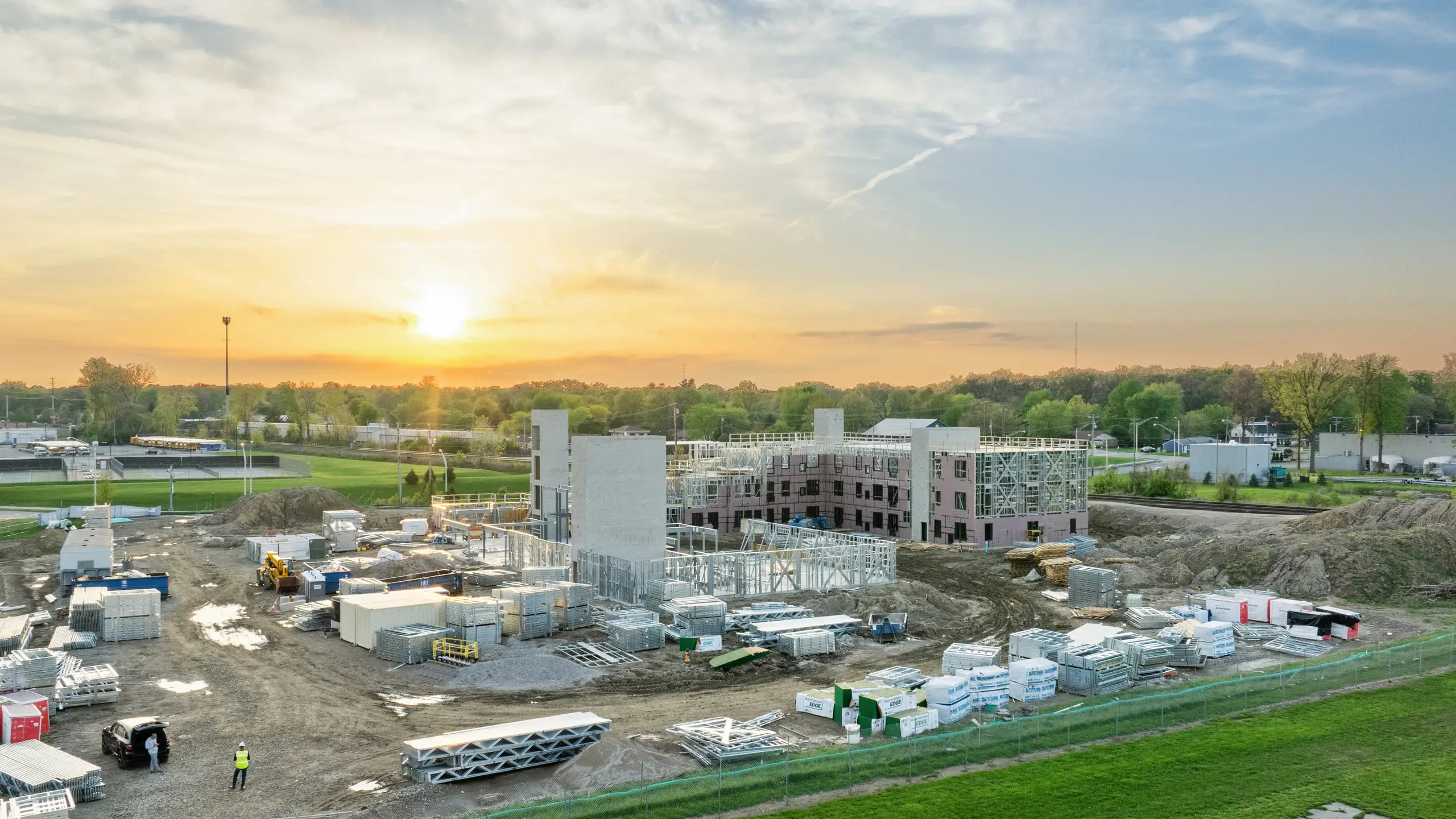 See it on a real jobGreen OaksProject film · Intellisteel Group · Holland, OhioRead the story
Related pages
Questions
What people ask us.
01How often should a construction site be flown?
It depends on the project and how fast it changes. Fly at the milestones that matter, such as site clearing, foundation, structure and completion. On longer projects, a regular interval gives you a clean progress record.
02Does a drone pilot on a jobsite need to be certified?
For commercial work in the United States, the pilot needs FAA Part 107 certification. We are FAA Part 107 certified and insured. Also check site rules and airspace before any flight.
03What is the difference between progress photos and marketing photos?
Progress photos record the state of the build on a given day, usually from the same positions each time. Marketing photos are composed to show the project well. One flight can often cover both if it is planned that way.
Discovery call
Let’s build something they can’t scroll past.
Start with a discovery call. 30 minutes by phone for a shoot, 60 on video for ongoing marketing.
Book a discovery call